5 Techniques of Every Successful Student
(Summary from this video by Justin Sung).
DISCLAIMER: I do not own any of the images used in here. They are taken from the video that Justin doodled.
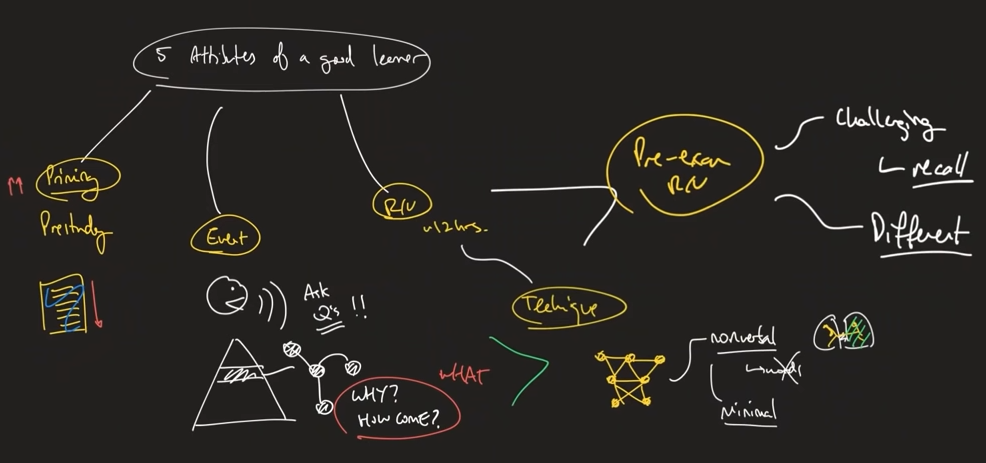
Takeaways
Priming/prestudy - priming as I mentioned is a big topic and shouldn’t be thought of simply as “prestudy”. Whatever notion you have of prestudy to begin with should be abandoned. See if the way I explain it is the same as how you understand it.
Event engagement - in class or lecture. What are you doing to increase your effectiveness in the primary learning event? How much control do you exert here?
Post event review - when do you do it and…
Review technique - HOW do you consolidate the information in your post event review.
Pre-exam or test preparation - are you using this time effectively, or just creating an illusion of preparation?
Details
Priming (Almost like pre-studying but not the same)
Skim through the content of your book/lecture notes to get a grasp on the bigger picture. So that connections become easier while learning the contents step-by-step.
Event (Something like a lecture happening where you acquire information)
Ask many questions as possible (To yourself or out loud) and also remember, ask more Why/How come questions than What questions.
Note down the topics you had trouble understanding and make them central while revising.
Delayed Note Taking : Take notes of a subject a few moments after the lecturer talks about it. So that it can create a sort of confusion in your head called Cognitive Load and makes studying much more effective. Make mindmaps!!!
(Extra Personal Tip : Try to navigate through the Bigger picture framework in your head while following through the lecture)
Revision and Consolidation
Revise the contents in 12 hours (after the event)
Make it challenging in a meaningful way. Aka Actively recall content (don’t re-read your notes). Try to make mindmaps (with really few words) or TEACH.